
For Bryce McDonald, the Cumberland County Playhouse was never simply a theater.
It was a place of belonging.
It was where a young boy discovered confidence, purpose, and a future he never could have imagined.

Today, McDonald serves as Producing Director and CEO of the Cumberland County Playhouse in Crossville, Tennessee, overseeing one of the nation’s most respected regional theaters. But his story with the Playhouse began long before he stepped into a leadership role. It began as a child sitting in an audience seat during a school field trip.
That single afternoon would quietly shape the rest of his life.
In 1986, a fourth-grade field trip brought McDonald to the Cumberland County Playhouse to see a production of Annie.
At the time, he was a young boy from Monroe County trying to navigate a new and unfamiliar world. Having moved from a small rural school into a much larger environment, he often felt out of place.
Then the curtain rose.
“I didn’t know what it meant at the time,” McDonald recalls. “But I knew I had found my place.”
The experience created an immediate connection.
For the first time, he felt at home.
McDonald grew up in a farming family with two older brothers. While they spent their time riding horses, working outdoors, and playing sports, Bryce found himself drawn toward music, storytelling, and performance.

As he jokingly describes it, while everyone else was shooting at things, he was dancing to Footloose and singing Whitney Houston songs.
Theater quickly became more than an interest.
“It made me feel safe,” he says.
That feeling continued to grow through church productions, music, and frequent trips to Crossville to attend performances at the Playhouse.
The theater became a second home long before it became a workplace.
As a teenager and young adult, McDonald viewed the Playhouse founders and leaders with admiration.
Jim, Paul, Mary, and Abby Crabtree seemed larger than life.
“They were like theater royalty to me,” he says with a laugh. “Like the Barrymores of Crossville.”
Their vision had transformed a small Tennessee community into a destination for professional theater, creating opportunities that inspired generations of artists.
Years later, McDonald would find himself working alongside the very people he once admired from afar.
His path to the Playhouse was not immediate.
McDonald’s first audition for an internship ended in disappointment.
By his own admission, it did not go well.
After singing Garth Brooks’ “The River” and performing a monologue from a church Easter play, he left without receiving the opportunity he had hoped for.
The rejection was painful.
But it was not the end.

While attending Tennessee Tech University, McDonald auditioned for Joseph and the Amazing Technicolor Dreamcoat through the Playhouse’s children’s theater program.
There, he connected with Abby Crabtree, who recognized his passion and potential.
She offered him the chance to volunteer.
That opportunity changed everything.
Once inside the Playhouse, McDonald immersed himself in every aspect of theater.
He learned to dance.
He stage managed productions.
He helped build sets.
He volunteered wherever he was needed.
Over the next decade, he developed his skills while learning under the mentorship of Playhouse founder Jim Crabtree.
The experience provided an education far beyond what could be found in a classroom.
It also created a mentor relationship that would profoundly shape his future.
Eventually, McDonald made the difficult decision to leave Crossville and pursue opportunities in New York.
Rather than discouraging him, Jim Crabtree encouraged the move.
“Go do what I couldn’t do,” Jim told him. “Go spread your wings. Just promise me you’ll come home.”
McDonald kept that promise.
Over the next decade, he worked in professional nonprofit theaters connected to Broadway productions, gaining valuable leadership and artistic experience. Throughout those years, Crabtree remained a mentor and trusted advisor, maintaining regular contact while helping prepare the next generation of Playhouse leaders.
In 2014, McDonald received the call that would bring him back home.
By 2016, he and a team of longtime Playhouse artists had stepped into leadership roles and begun writing the next chapter of the organization’s history.
Today, the Cumberland County Playhouse welcomes nearly 100,000 visitors each year, employs dozens of artists and craftspeople, and relies on hundreds of volunteers to support its mission.
Yet despite its growth, the purpose remains unchanged.
For McDonald, the Playhouse still represents what it represented when he was a child.
“The Playhouse became my soft place to land,” he says.
That belief fuels his passion for arts education and youth development.
Over the years, he has witnessed firsthand how theater can transform lives.
He has watched shy children gain confidence.
He has seen friendships form across social barriers.
He has watched young people discover talents they never knew they possessed.
Most importantly, he has seen how the arts create empathy, understanding, and belonging.
McDonald has also become known throughout the Upper Cumberland for his collaborative leadership style.
Rather than viewing other arts organizations as competitors, he actively seeks partnerships with schools, universities, nonprofits, and community groups.
“We’re always stronger together than we are separate,” he says.
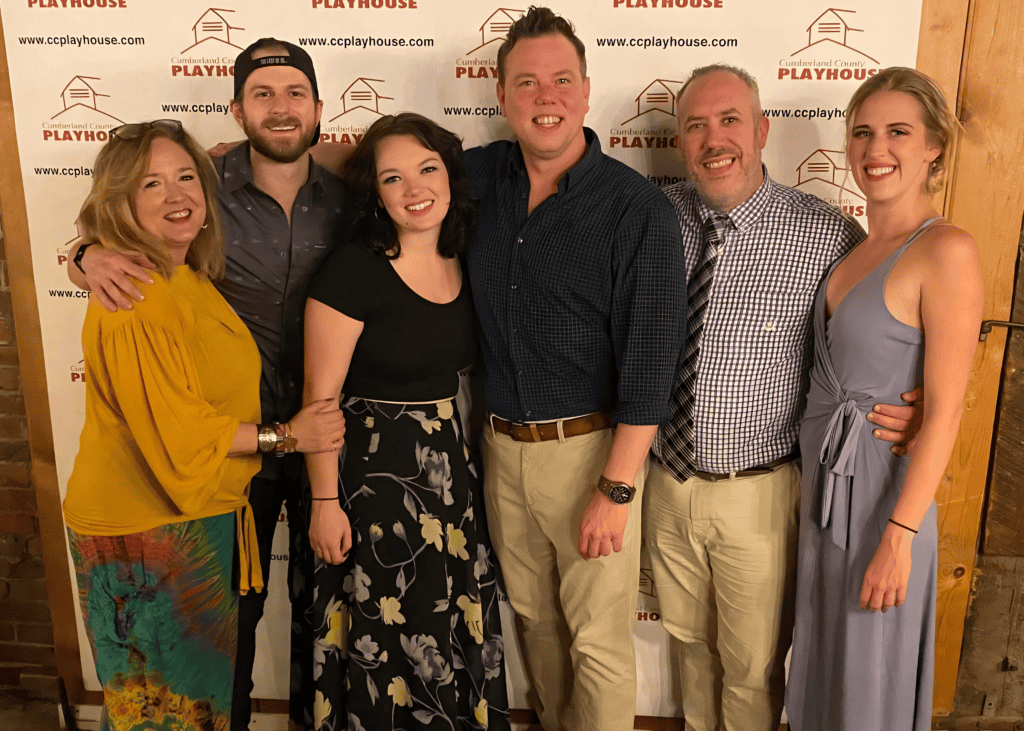
That philosophy has helped strengthen the region’s growing arts community and expand opportunities for artists, students, and audiences alike.
The recent passing of Jim Crabtree has made McDonald’s responsibility even more meaningful.
He understands the enormous legacy left behind by the man who mentored him, encouraged him, and ultimately helped shape his career.
“Jim saved my life twice,” McDonald says quietly.
For McDonald, honoring that legacy is not simply about preserving what has already been built.
It is about helping it continue to grow.
It is about ensuring future generations experience the same sense of belonging that first captured his heart decades ago.
For Bryce McDonald, the Cumberland County Playhouse will always be more than a theater.
It is the place where a young boy discovered who he was.
It is the place where mentors changed the course of his life.
And today, it is the place where he works every day to make sure others experience that same feeling.
Because sometimes a theater is more than a building.
Sometimes it is where belonging begins.
Written by Melissa Ellis
Photography by Amanda McGinnis