Written by Shannon Cantrell
Photography By Miranda Nowell
Overton County does not lack history. It has been shaped by pioneers and veterans, musicians and farmers, teachers and families who carved lives out of hills and hardwood forests. Sacrifice and grit are not abstract ideas here; they are woven into the soil.
What makes our town and county remarkable is not only that its stories exist, but that someone cared enough to keep them.
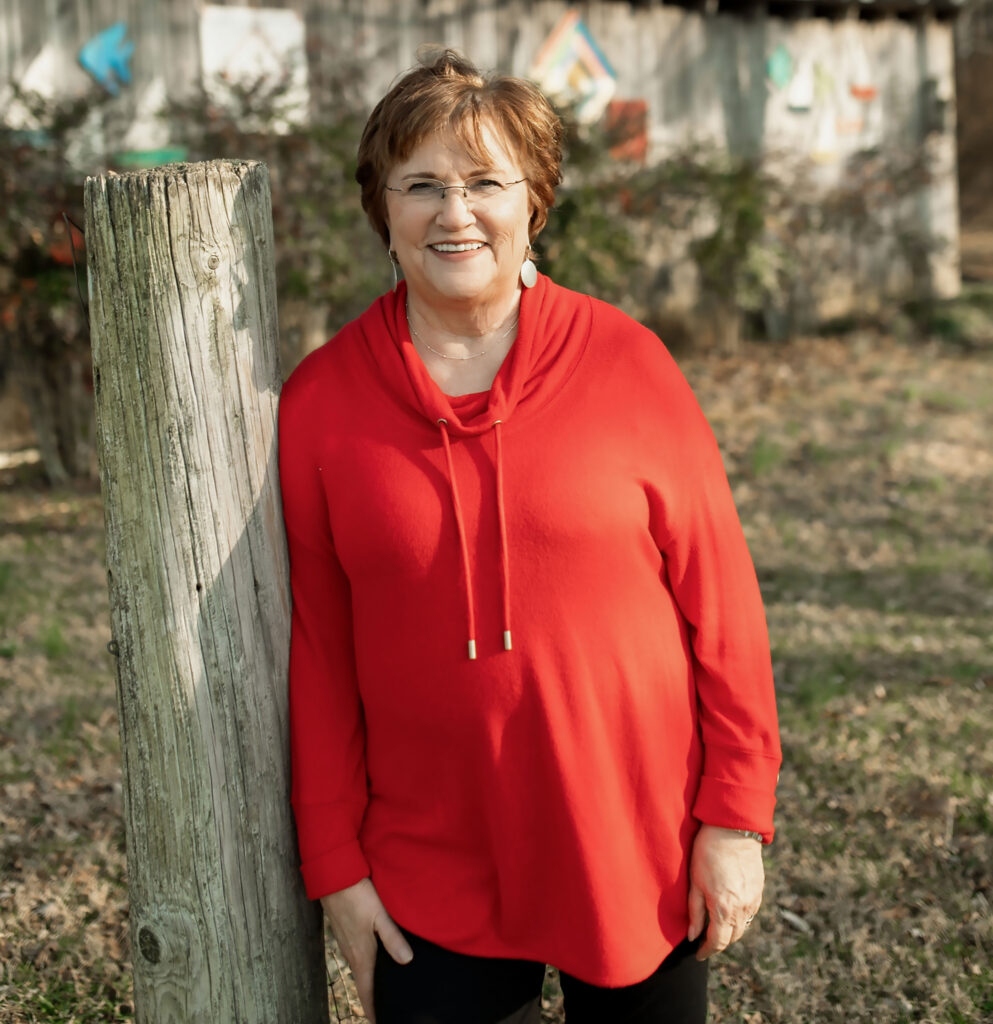
For more than two decades, that someone has been Paula Stover, steady and faithful in her commitment to making sure Livingston and Overton County’s stories never fade.
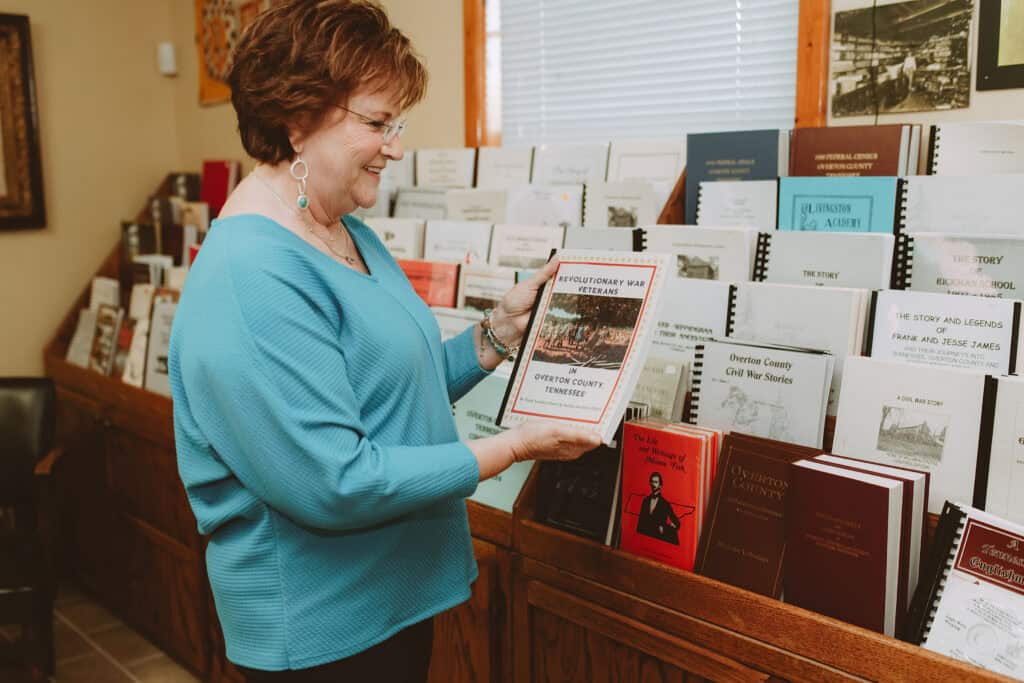
In March of 2003, the sky opened over Livingston.
Rain hammered the old jail on West Broad Street, the same brick building where generations once peered through bars and counted the days. The concrete floors were cold, and paint still peeled in places. Only the front portion of the building had been made presentable. The back rooms and basement were dust and possibility.
For three years, volunteers had scraped, cleaned, patched, painted, fundraised, and imagined what this place could become. They were not finished, but they were ready. “We decided we were just going to open with what we had,” Paula remembers.
So they did.
Quilts were hung everywhere they could be hung, bright hand-stitched stories draped against old jail walls. They called it a quilt show. In truth, it was a test. Would anyone come? Outside, the rain came down in sheets. Inside, umbrellas dripped by the door as people stepped in anyway. Wet footprints marked the floor. Visitors moved slowly through the rooms, touching fabric and pointing out patterns that reminded them of their mothers’ bedspreads or their grandmothers’ cedar chests.
“They came in a monsoon,” Paula says with a quiet smile. “Looking back, it was primitive, but we were so proud of what we had done.” That day, the Overton County Heritage Museum opened not finished, but alive. Over the next three years, work continued. Volunteers cleared the basement, patched ceilings, painted walls, and shaped exhibits. In 2006, during Overton County’s Bicentennial celebration, the museum held a second grand opening, unveiling the full building.
Two hundred years of history, housed in a jail transformed into a keeper of memory.
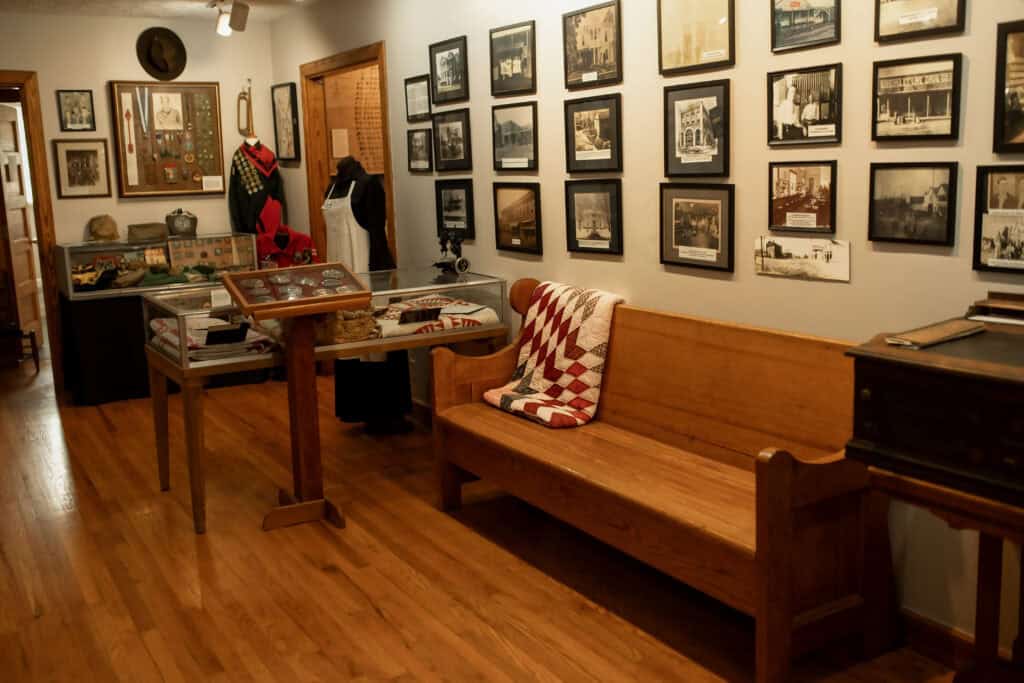
The museum was not built by large endowments or corporate sponsors. It was built by bake sales and yard sales, plant sales and fashion shows, quilt auctions and spaghetti dinners delivered across town. Every pie baked and every ticket sold moved the dream forward one small step at a time.
A modest $24,000 grant from Humanities Tennessee allowed the group to bring in a museum designer and scholar from Knoxville. The guidance was valuable, and the early exhibits began to take shape. Still, something did not sit right with Paula. “All the military was in one little cell,” she recalls. “You can’t cover all the wars in one section.”
Overton County’s story was too layered, too personal, to be confined or simplified. It would need room to breathe.

Nearly a decade after the museum first opened its doors, another turning point arrived.
In 2012, Chris Barlow, a history major returning to college, chose the Overton County Heritage Museum for his internship. What followed would reshape the building. Rather than simply adjusting a few cases, Paula and Chris made a bold decision. They would take everything down. Every frame, artifact, and label. They boxed each item carefully and labeled it, pulled nails from the walls and patched holes and stood in empty rooms and asked themselves how the story of Overton County should truly unfold.
For weeks, they worked twelve-hour days, walking the old jail and reimagining it room by room. Each war gained space to be understood on its own. Civil War, New Deal, WPA, Alpine Institute, African-American history, education, medicine, scouting, music, and space exploration were given thoughtful attention. “It’s the hardest layout to work with,” Paula says of the old jail building. “But it works.”
Today, visitors from all fifty states have signed the guest register. Many arrive expecting a small local collection and leave surprised by the depth and richness of what they find.


To understand Paula’s devotion to preserving history, you have to go back much further than 2003. You have to go back to a screened-in porch.
Paula grew up on a fifth-generation farm, now recognized as a Tennessee Century Farm. Her father, Ray Swallows, taught chemistry and biology at Rickman High School while farming on the side. While mother, Eva, kept the household running. Paula and her sister Sandra hauled hay, picked corn, cleaned barns and chicken houses, and learned early that hard work was simply part of life.
Her grandfather lived next door. In the summer of 1968, he sat on his back porch writing their family history. He signed and dated it when he finished. He died that November. Paula still keeps that handwritten history.
History was never something distant or academic for her. It was present in daily conversation. She remembers when electricity first came to their home. Her parents told stories about the first automobile they ever saw and the first telephone. Change fascinated her, not because it was dramatic, but because it revealed how quickly the world could move beyond what once seemed permanent. For Paula, history begins at the kitchen table, in family stories told often enough that they become part of who you are.
In the 1980s, as the Overton County Historical Society revived its efforts, a group began discussing the idea of compiling a county history book. Paula attended one meeting for one simple reason: the Mirandy Post Office, named after her grandmother.
If its story was not recorded, she realized, it might never be told. “If I don’t turn that in, nobody will ever know about it.”
She walked into that meeting intending to contribute one story. She left committed to a four-year project. This was before home computers. Paula balanced a portable typewriter in her lap late into the night, tapping out names and dates until two and three in the morning. She and others tracked down photographs, verified spellings, and preserved details that might otherwise have slipped away.
When the county history book was finished in 1992, she was hooked. Later, she and Sandra wrote and published a book about their parents, Nannie and Papa, giving copies to every grandchild. Their family’s story joined the larger county narrative, a reminder that history is built one household at a time.
Claudine Bilbrey was the spark who first secured the Humanities Tennessee grant and began the formal museum effort. Paula stood beside her from the beginning. There were no large budgets, only determination.
When the museum’s project director stepped away, Paula was asked to step in. She worked closely with Claudine for years, and even into her early nineties, Claudine remained active until shortly before her passing in 2010.
After Claudine’s death, the work did not slow. It simply became Paula’s to carry. She stepped fully into the role of director, not because she sought it, but because the museum needed someone steady at the helm. She has never drawn a paycheck for her work at the museum, and yet the investment she has made in this community is immeasurable.
An average day at the museum can be quiet or unexpectedly busy. On winter mornings, Paula may unlock the doors, straighten displays, and answer genealogy calls from across the country. On busier days, several groups might fill the small rooms at once, schoolchildren on field trips, retirees from other states, families searching for the story of a great-grandfather.
Most of the museum’s volunteers are genealogists, and the museum works closely with the genealogy room at the local library. Questions are answered and connections are made.
The city provides water. The county covers the phone bill, though long-distance service is still not included. Book sales and donations help sustain operations. At times, volunteers have paid expenses from their own pockets.
“We have all sacrificed and given up other things we wanted to do,” Paula says. “but we do it because we love it.”
And when someone looks around and says, “This is wonderful,” it makes the long hours worthwhile.
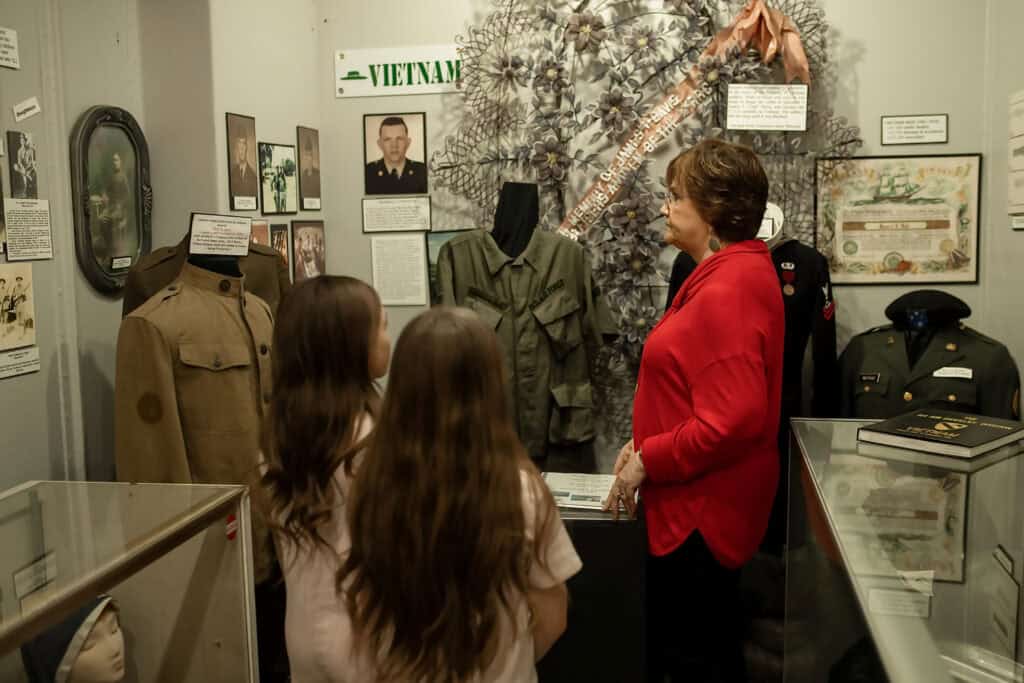
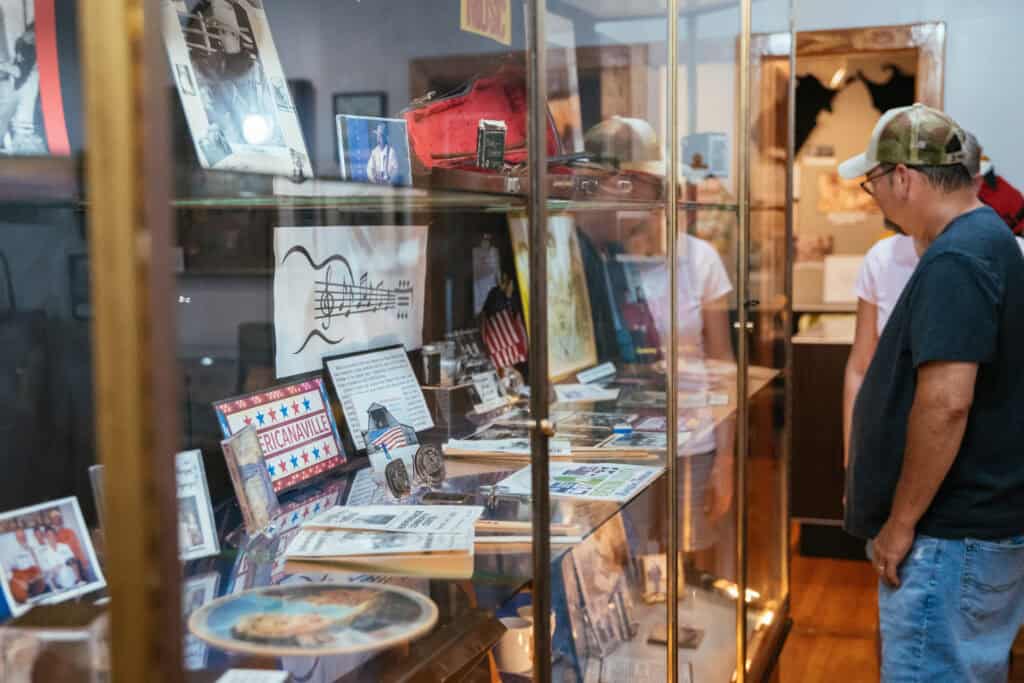
Some exhibits are permanent anchors while others rotate. One story Paula often reflects on is that of Tom Davis, a young man from Overton County who died serving in Vietnam.
The beaded pall that covered his casket was created by Vietnamese artisans who worked with him and held him in high regard. This pall is currently hanging in the museum. It is intricate and so very beautiful, heavy with meaning.
Fifteen years ago, the museum hosted Tom Davis Day. Two Greyhound buses brought members of his unit back to Livingston. They enjoyed the day with friends and family and remembered. In that moment, history was not distant. It was personal.
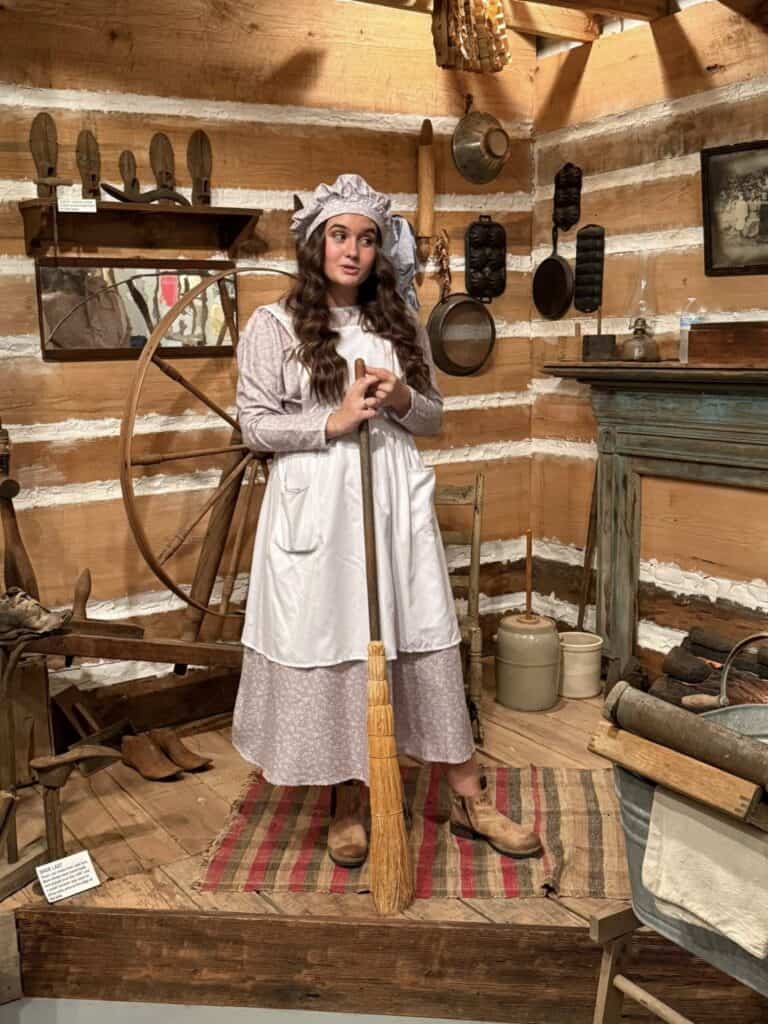
Events like Homer Ledford Day, Roy Roberts Day, and Night at the Museum continue that tradition. In 2025, forty-three high school students chose real historical figures represented in the museum, researched their lives, and dressed in period clothing to tell their stories in the first person. For Paula, those evenings are signs that the next generation is paying attention.


The museum’s work is not finished. In many ways, it is entering a new season.
As the nation approaches the 250th anniversary of the signing of the Declaration of Independence, Paula and her sister, Sandra Elliott, are preparing a commemorative edition of Revolutionary War Veterans of Overton County. The original publication, which earned statewide recognition, documented the men who came west on land grants, filed pension papers when this region was still called “West Tennessee,” and laid the earliest foundations of what would become Overton County.
This new edition will not simply reprint what was written before. It will expand it.
Paula and Sandra are adding a new chapter devoted to medical history, tracing how early settlers treated illness, how care evolved in primitive conditions, and how foundational medical knowledge was to survival in a frontier county. For Paula, this addition is essential. The story of a place cannot be told only through battles and land deeds; it must also include the quiet resilience of families who nursed the sick, delivered babies, and found ways to endure long before modern medicine reached these hills.
“They had to build everything,” Paula says. “Government. Schools. Law enforcement. Medical care. They built a county here.”

Alongside the expanded publication, the museum has applied for a grant to host a week-long summer program for students, helping young people understand how Overton County’s story connects to the larger American narrative. The goal is not to rehearse old dates or memorize distant events, but to help students see that the founding of this county is woven into the founding of the nation itself.
For Paula, America 250 is not about looking backward in nostalgia. It is about continuity, about making sure the next generation understands that the freedoms and institutions they inherit were built by people whose names still appear in these local records, whose descendants still live here, and whose courage still echoes through the pages of county history.
Paula wants future generations to understand what it took to establish a county in primitive conditions. Revolutionary War veterans arrived with land grants when this region was still called West Tennessee. Families set up government, elected sheriffs, established schools, and provided medical care with limited resources.
She wants young people to see that everyday conveniences were once hard-won. Laundry meant hauling water from a spring, building a fire under a wash pot, scrubbing until hands blistered, rinsing and wringing each piece by hand. “And now,” she says softly, “we press a button.” “You have to know where you’ve been to know where you’re going.”
If she could travel back in time, she would not change history. She would simply observe and learn.
Since she cannot, she preserves what remains so the rest of us can understand the past.
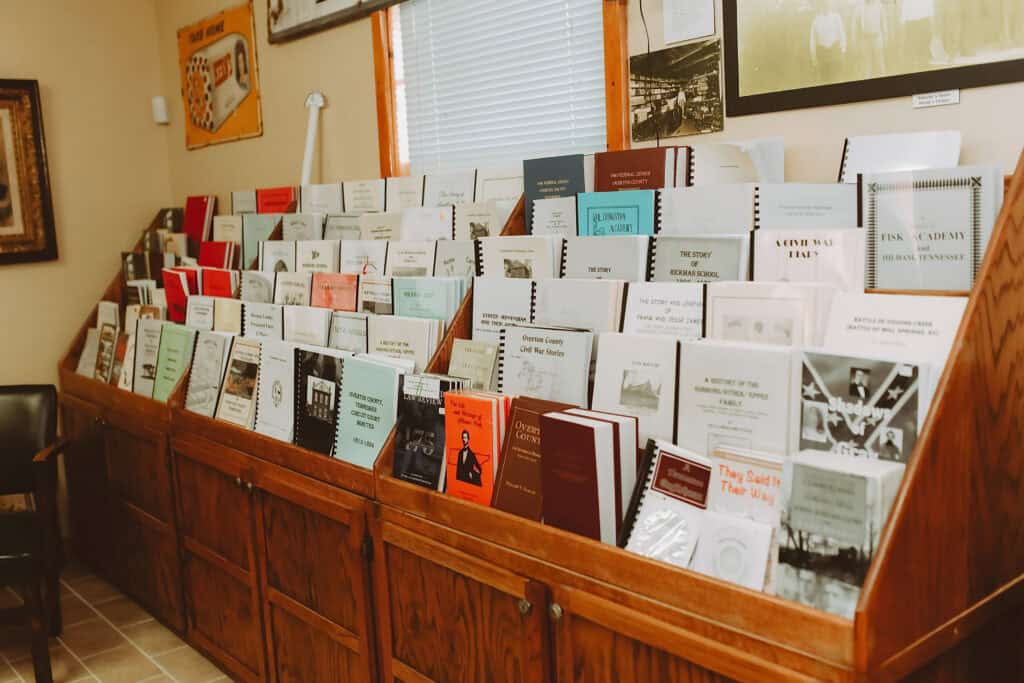
The old jail on West Broad Street no longer holds prisoners; it holds Overton County itself. Within those brick walls are the stories of farmers and soldiers, musicians and teachers, pioneers and dreamers who shaped this place long before most of us were born. Court records rest beside land grants. Quilts hang not merely as fabric, but as memory stitched into pattern. A beaded pall honors a young man who never came home. Schoolbooks, uniforms, instruments, and tools speak quietly of lives once lived with courage and conviction.
And woven through every room, whether visitors realize it or not, is the steady and faithful work of a woman who simply cared enough to make sure none of it disappeared. Paula Stover did not build Overton County, but she has spent years making certain we remember who did. She has labeled it, arranged it, researched it, and protected it so that when we walk through those doors, we are not simply looking at artifacts; we are recognizing ourselves.
The Overton County Heritage Museum is open Thursday, Friday, and Saturday from 9 a.m. to 2 p.m. on West Broad Street in Livingston. And somewhere in those rooms, you may recognize a piece of yourself. You can find more info on their Facebook page here: https://www.facebook.com/OvertonCountyHeritageMuseum