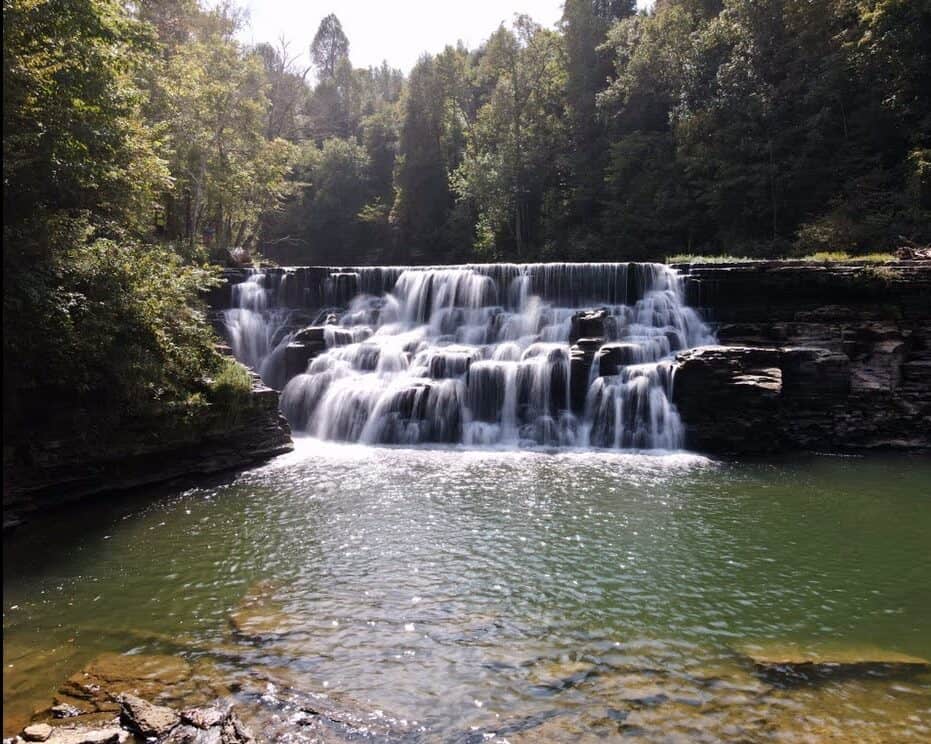
When I pulled into Waterloo Falls, that winter Tennessee morning, Alice was waiting for me at the pavilion. Nathan was already somewhere out on the property, working ahead of the coming season. This is the kind of place that never really goes still. Waterloo is not passive land. It never has been.
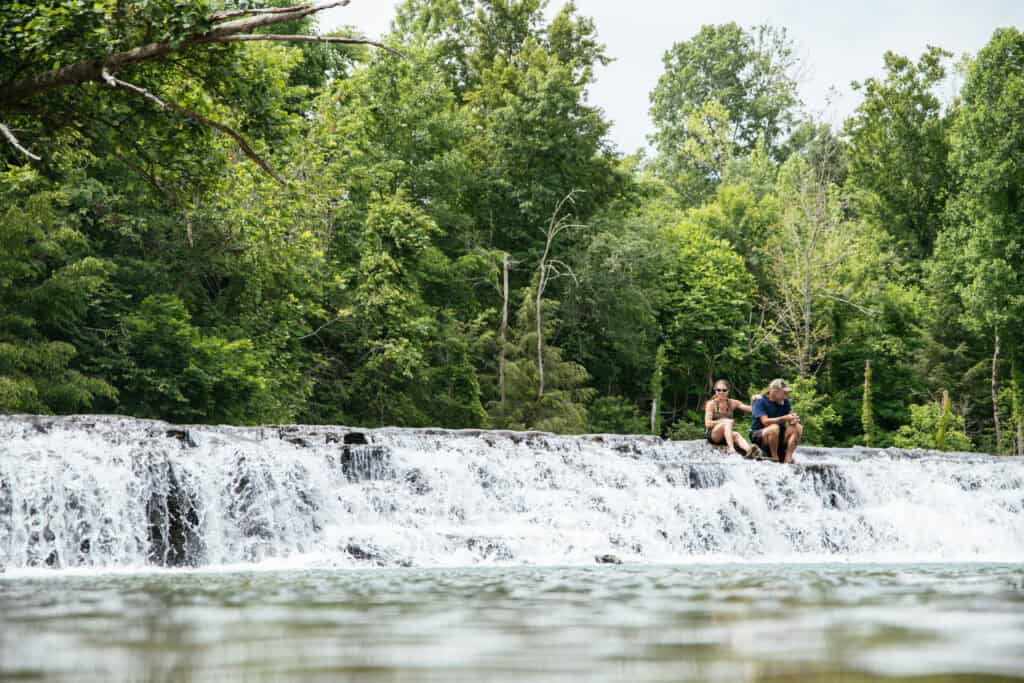
Long before weddings and music festivals, Waterloo was a rough frontier hub along Spring Creek near the Putnam–Overton County line. In the late 1700s, settlers built homesteads here. By the 1830s, a powder mill stood on this ground, later becoming a gristmill that fed local families for more than a century.
It burned, it flooded during the Civil War and it was rebuilt.
In 1878, this quiet bend in the creek became the stage for the Siege of Waterloo, a three‑day armed standoff between federal revenue agents and local moonshiners. Then, when the mill finally closed in the 1950s, the land slowly disappeared into overgrowth. Decades of brush and fallen limbs swallowed Spring Creek until you could barely see the water.
That’s how it looked when Alice and Nathan Davey first came. Most people would have seen only decay and headache. They saw possibility.
Their story with this place really started in 2018. They traveled here from San Diego to attend the Muddy Roots Festival, held near Waterloo Falls. Before the music started up, they found themselves down by the creek and waterfalls, lingering there day after day.

They simply fell in love.
Alice had grown up in Massachusetts, Nathan in Arizona. Tennessee would be his ninth state. He already knew the region from his time as a furniture maker for Cracker Barrel, traveling to the company’s headquarters in Lebanon.
Back in San Diego, they had a conversation that changed the trajectory of their lives:
We have to seriously start looking for “that place.” They were more than ready to leave the city life behind.
They narrowed their search to the Southeast: the Carolinas, Virginia, Tennessee. They researched, compared, and circled back. Over and over, everything pointed them toward Tennessee. It made sense for business, for retirement, and for the kind of women‑owned enterprise they wanted to build. So they did something bold: instead of trying to talk themselves into it, they tried to talk themselves out of it. They went looking for reasons not to move here. Alice laughed when she told me that. “Tennessee was number one… and number two,” she said. Eventually, they stopped fighting it and said yes.
When the Waterloo property showed up online, Alice remembers the jolt of recognition. That can’t be Waterloo. That IS Waterloo. You can still hear the excitement in her voice when she tells it.
Alice and Nathan had no idea the property had been sitting on the market for three years. They began their search in January 2019. By March, they had closed on the property. In April, they were already out there with chainsaws and gloves, carving roads and clearing brush. The land was thick with overgrowth. The work felt endless: Clear. Haul. Burn. And then do it again. Their first idea was fairly simple: camping and short‑term rentals. But as the land opened up and the creek came back into view, so did a deeper vision. They began to picture live music woven into the landscape they loved.
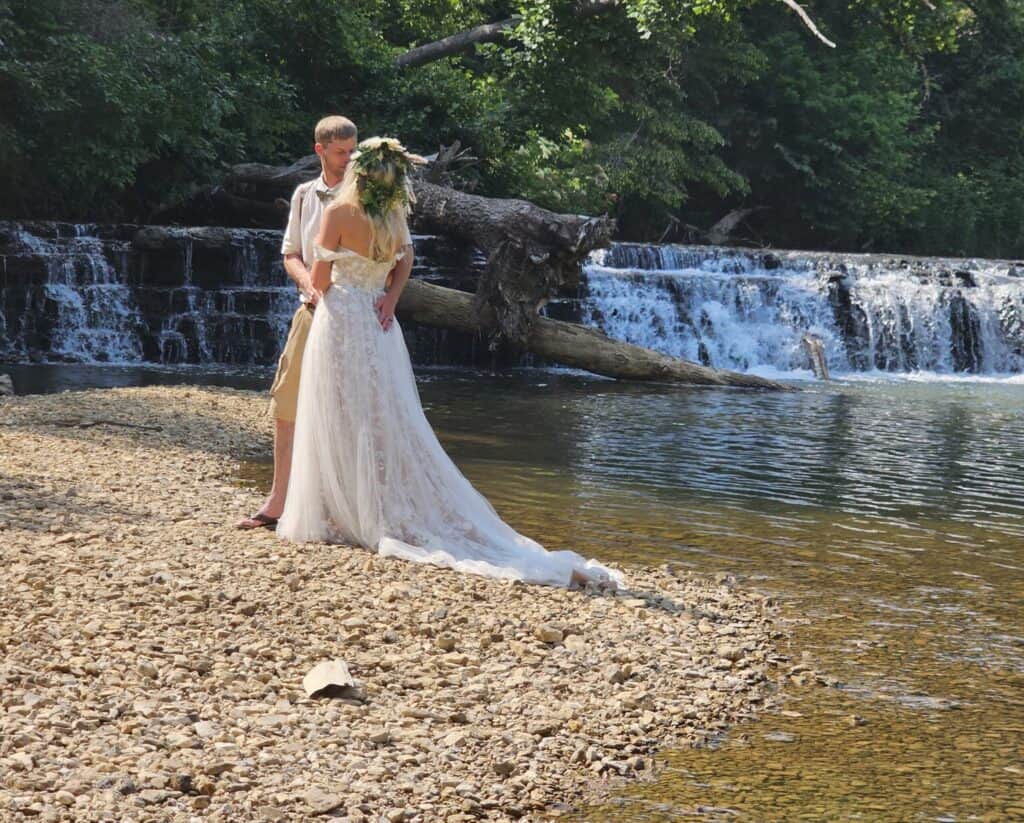
By August 2019, they stood on this very ground and got married.
By July 2020, they were living here full time and opening the venue.
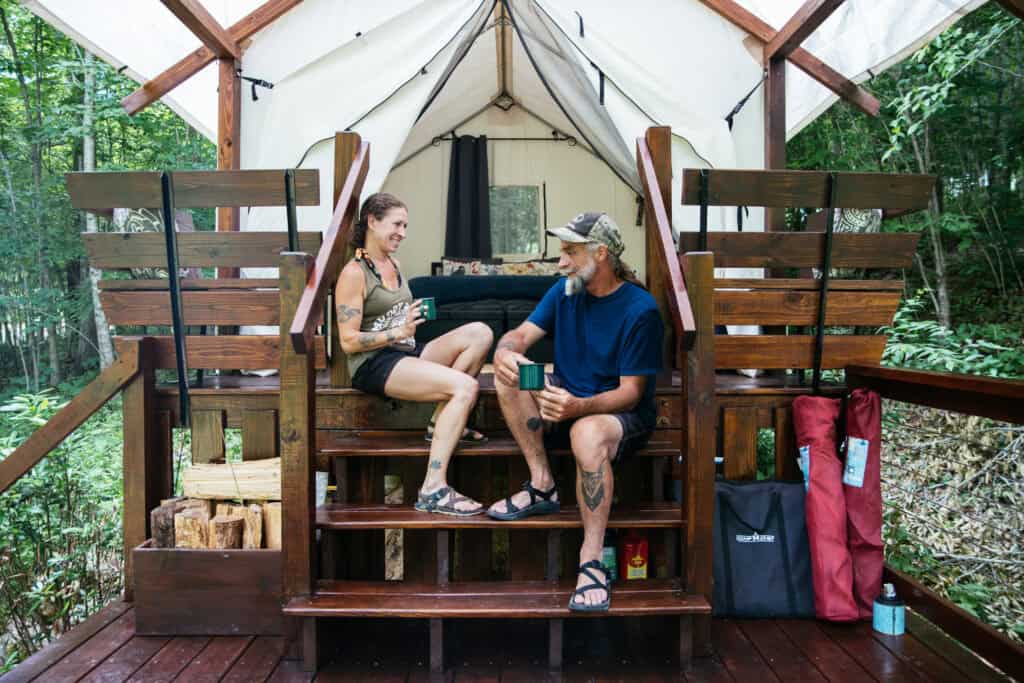
From the outside, it might look like a dream, but the early days weren’t romantic. They drilled three wells. They first hit sulphur methane. The second didn’t pan out hitting petroleum. The third finally seemed promising—until the filtered water revealed it was saltwater. That’s when they pivoted to rainwater collection, a system now filtered six times before use. When I asked Alice about water security, especially after recent local shortages, she didn’t hesitate. “We’re good,” she said. “We’re on rainwater.” There was quiet resolve in that answer. They had come too far to back down now. Later, Nathan told me that waking up to the waterfalls every morning is what keeps them going on the hard days. When he says it, you believe it.
As we talked, a couple pulled up and walked toward the pavilion to check into the suite attached to it. It was winter. There were no big events on the calendar that weekend. They were simply here to hike and breathe for a while.
Alice and Nathan greeted them like old friends instead of customers. That small, ordinary moment said a lot. Waterloo isn’t just a venue you rent. It’s a place people seek out, even in the quiet season, when the trees are bare and the creek runs cold and clear.

From the beginning, they had a clear picture of what they were looking for: a south‑facing hill, water on the property, and a location with tourism potential. Waterloo checked every box—and then a few they didn’t know they needed.
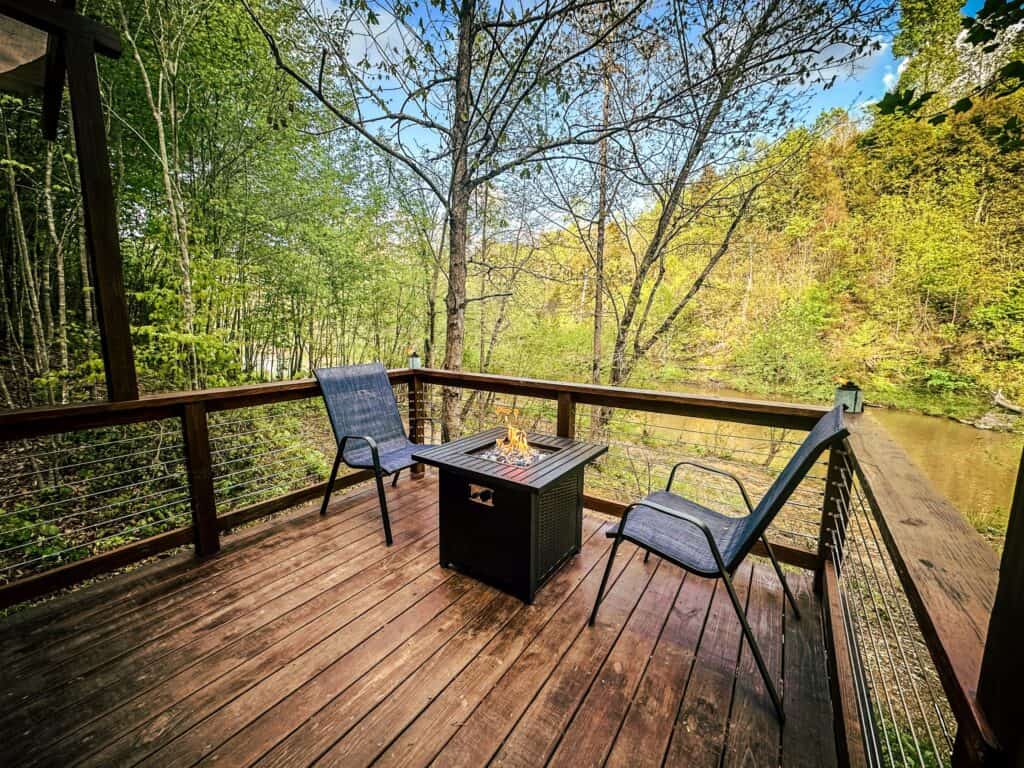
Today, the property holds a pavilion with an attached guest suite, a small cabin that transforms into a tavern during music events, a glamping tent or “Tent in the Trees” as they call it, inspired by national park stays, primitive camping spots tucked into the landscape, and The Cascades at Waterloo, which will eventually grow to as many as fifteen sites. For those who want to keep it simple, there’s boondock camping with no hookups, and plans are already forming for future RV sites.
In summer, families spread out along the creek, children wade into the water, hikers follow trails under the canopy, and people who have been indoors for too long remember what it feels like to be outside again—really outside, in a way that feels accessible but still wild enough to be memorable.
One of Alice’s favorite moments came from a five‑year‑old splashing in the creek who suddenly announced, “This is the best day of my life!” For them, that’s the return on investment.
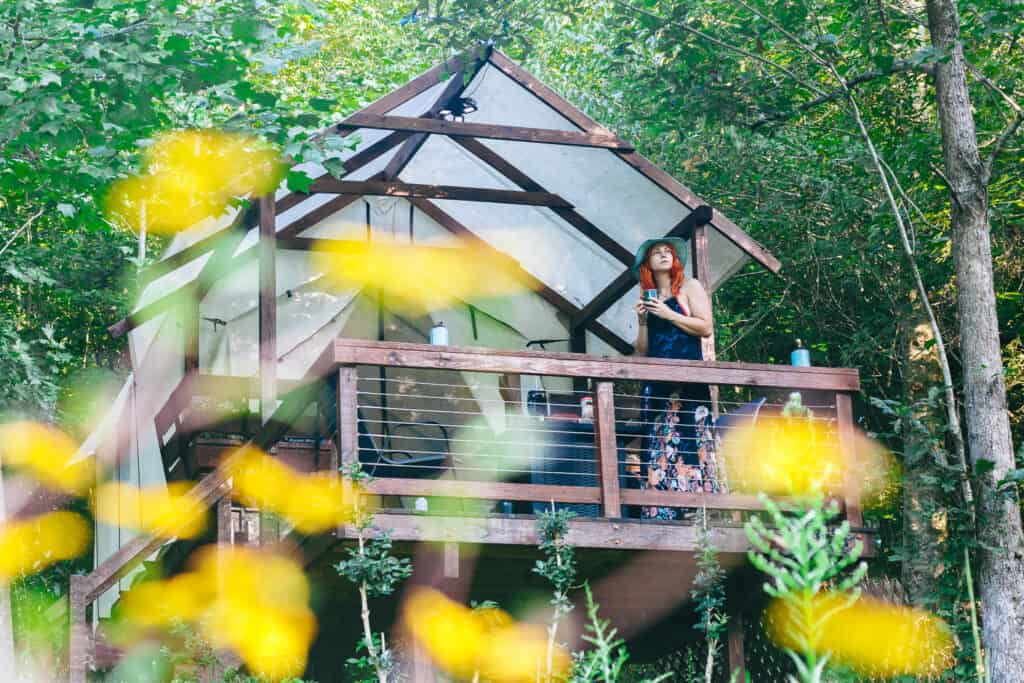

Waterloo’s love affair with music didn’t end with that first festival visit; it’s become part of the place’s identity.
On April 24–26, 2026, Waterloo will host the return of Spring Awakening, a three‑day Americana gathering featuring artists like River Shook, Joseph Huber, Sunny War, The Yawpers, IV & The Strange Band, and more. It’s free to attend additional cost for camping, rain or shine, with friends, music, and the steady presence of nature all braided together.
In a county proudly known as the Home of Americana Music, Spring Awakening doesn’t feel like a one‑off event. It feels like a continuation of something the land was already humming. For more information about Waterloo Falls and the events held there visit them at https://waterloovenueandevents.com/
Waterloo began as a frontier necessity.
It became a battleground.
It endured neglect and decline.
Now, it offers something softer: restoration.
The same land that once powered mills and conflict now powers memory. Not by rewriting its history or pretending the hard parts never happened, but by honoring what came before and building forward with care.
It’s still not passive land.
But now, it’s a place to breathe
Written By Shannon Cantrell