Written by Shannon Cantrell
Photography By Miranda Nowell
On most days at Brazen Que, the line starts early. People come in from nearby roads and downtown side streets, the first thing that hits you isn’t the smoke, it’s the warmth. Christian music hums over the speakers, the crew is already laughing about something behind the counter, and every single person you see is wearing the same thing: a genuine smile. The room feels less like a restaurant and more like a place that’s been expecting you.
What you don’t see right away, past the big steel smokers out back and the “show up late, lose weight” sign on the wall, is that this place was born around a long table states away, where teenage girls who weren’t sure when their next meal might come finally learned what it felt like to sit down, exhale, and know they were going to be fed.
Before there was Brazen Que, there were seven years of being “mom and dad” to teenage girls who had seen more than most adults ever will. Nick and Kendra Jones served as house parents in group homes in California, Texas, and Indiana. Their job was simple on paper and impossibly complex in real life: keep them safe, keep them loved, and keep them fed.
They quickly learned that food wasn’t just food for these girls. It was history. It was fear. It was proof that they were finally being cared for.
There was the girl who ate out of the dog bowl because she knew the dog would be fed when she wouldn’t. Another who would tear her pancakes into tiny bits, convinced that more bites meant more food. Some came in with birthdays guessed as January 1, because no one knew the real date.
So Kendra started asking every new girl the same question: “What’s your favorite food?” On their birthday, they would either make it or find it. One girl, who had been homeless, thought for a moment and replied, “Meat. Any kind of meat. No soup.”
Nick responded to all of that hurt and hunger the way he knew best: by learning to cook things that made them feel cared for. They made authentic Cuban sandwiches and even baked the traditional bread from scratch, a two‑day process. They taught themselves to make Ethiopian dishes so the kids from Ethiopia could taste something that felt like home again, right there in an American group home kitchen.
Even the standard, institutional dinners weren’t safe from Nick’s tinkering. If everyone was getting the same basic pizza, he’d whip up garlic butter and brush it on the crusts, just to prove that someone had tried. It seems small, but to a kid who has never had anyone do anything “extra” for them, garlic butter on a pizza crust can feel like a love letter.
Around that long table, food became a language:
You’re safe here.
We planned for you.
You matter enough for us to work this hard.
Funny enough, Kendra was not a barbecue believer at first. Growing up around overcooked meat drowned in sauce, she didn’t see the appeal of standing in line at dawn for brisket.
Then they moved to Texas.
Nick started talking about this place in Austin, Franklin Barbecue, where people would line up in the dark, waiting hours for smoked meat. He told her they’d have to be there at six in the morning. She thought he’d lost his mind. For their anniversary, she surprised him. They got in line at Franklin before sunrise, waited with everyone else, and finally sat down with a tray of the real thing. Nick took one bite of brisket and says it “literally changed my entire life.” For Kendra, it was the single best meal she’d ever had.
Something clicked that day. Back home in Texas, Nick fell headfirst into the world of Texas‑style barbecue. They lived on a 13,000‑acre ranch that raised its own pigs and cattle. Nick started buying briskets and hogs through the meat guys. He experimented with fires, woods, rubs, and temperatures.
When one of “their girls” lost her pig in the 4-H competition because she hadn’t taken care of it, Nick stepped in. He bought the hog, had it processed, smoked the whole thing, and fed the girls’ community with it.
He likes to say he had “the best critics in the world for seven years: teenage girls.” There’s no sugarcoating from a teenager who’s had a hard life. If the ribs were better last week, they’ll tell you. If the brisket’s dry, you won’t have to guess. The honesty hurt sometimes, but it made him better. Slowly, the dream took shape: what if this wasn’t just a passion? What if this was what he was meant to do?
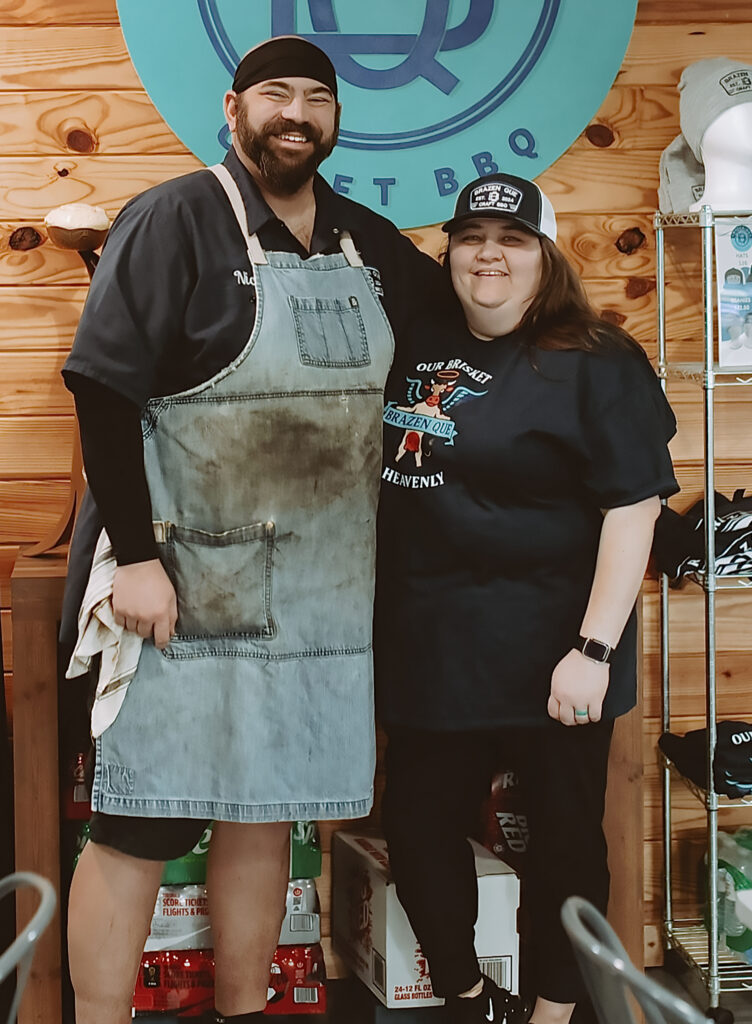
Kendra was the practical one. A barbecue restaurant sounded wonderful and terrifying. at the time they were living in Indiana and had just received the news that Nick had some health concerns, with no savings and no clear path forward. They talked to Kendra’s stepdad Bill, originally from Monterey, and her mom, who were living in Celina. They agreed to move to Tennessee and promised to support them however they could.
They came to Livingston to look around. Bill drove them past a little building by a pond on Bradford Hicks Drive, a boxy place with more history than charm. The owner, Pat Poston, had seen it flood and recover and was deeply attached to it.
That night, as they drove back down the hill on Bradford Hicks, they saw a rainbow. It arched down toward the pond and the plain little building. Kendra remembers saying, half‑joking, “How funny would it be if the rainbow stopped at the restaurant?” It did. They took it as a nudge from God: this is your spot.
When they met with Pat, she told them, “For whatever reason, this just feels right,” she said about Nick and Kendra. Coming from someone who knew the building’s entire history, through flood and repair and business after business, that meant something. Pat worked out a lease that gave them room to breathe and start small. While Nick and Kendra had to go back to Indiana to finish their commitment to the girls, Kendra’s parents and friends Matt and Tara Roberts and their crew stepped in. They managed contractors, painted walls, and got the little building ready to become a Texas‑style barbecue joint in the middle of the Upper Cumberland.
In the middle of all that progress, the phone rang in Indiana. The second biopsy confirmed it: squamous cell carcinoma of the head and neck. For Kendra, whose family had already experienced painful losses to cancer, it felt like a death sentence. The balloon of hope didn’t pop, but it definitely deflated a bit. She asked the question any spouse would ask: “Do we stop? Do we not do this?” Nick’s answer was immediate. Cancer, he said, “isn’t a death sentence anymore. It might be rough for a bit, but…” And then he said something that became a kind of anchor for them: if they delayed their plans, then God wouldn’t get as much glory as He should. He thought of Peter sinking when he took his eyes off Jesus. Nick refused to take his eyes off the promise.
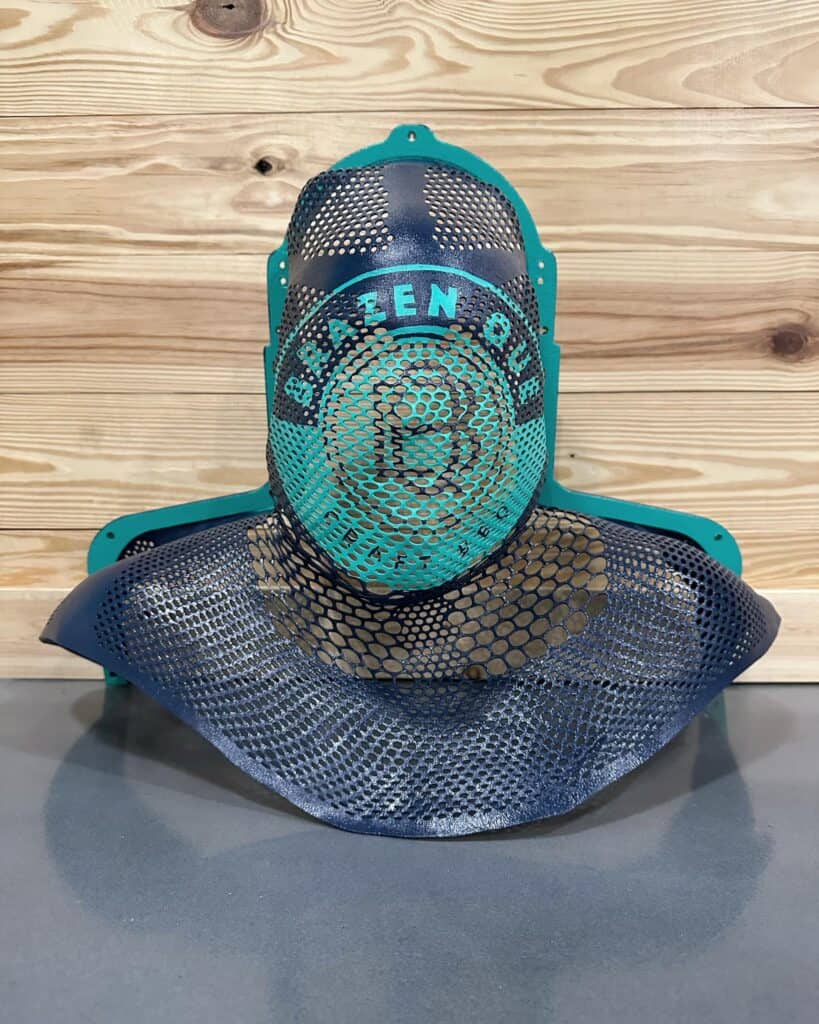
Radiation required a custom mask and vest molded to his head, neck, and chest. Every weekday for seven weeks, he lay on a table while that rigid shell was bolted down over him. As he lost weight, they had to strap his wrists, his feet, even his elbows so he wouldn’t move as the machine circled and fired. Each session took fifteen to twenty minutes. Fridays added four hours of chemo.
Chemo, Nick says, is one of the most humbling experiences of his life. “You’re never the worst‑off person in the room,” he says. He decided if he had to be there, he was going to be the brightest spot of someone’s day. So he smoked chicken thighs, carried them in, and fed the people who were saving his life—nurses, techs, other patients.
“It wasn’t that I had to see them every day—they had to see me. So I decided to make that count and be a bright spot for them.”
He lost a hundred pounds. His beard, which felt like part of who he was, thinned and faded. He kept it as long as he could, Kendra braiding to help it stay intact, he said joking, “I’m not trying to be hip—I’m just trying to keep what I’ve got.”
He mailed his radiation mask to a close friend in Utah, one of the best artists he knows, and told him, “Do whatever you want, just don’t paint it Michigan colors.” (Living in Ohio at the time, that was a hard line. He still rolls his eyes at the yellow mop buckets in the restaurant.) The mask came back transformed—no longer just a medical device, but a piece of art.
Today, that mask hangs on the wall at Brazen Que, painted with their logo. It’s not loud, but it’s there, a private reminder of how far they’ve come. Nick originally wanted it in the smoke shed so he could look at it on bad days and think, “It’s rough, but it’s not this bad.” Instead, everyone gets to see what they made it through.
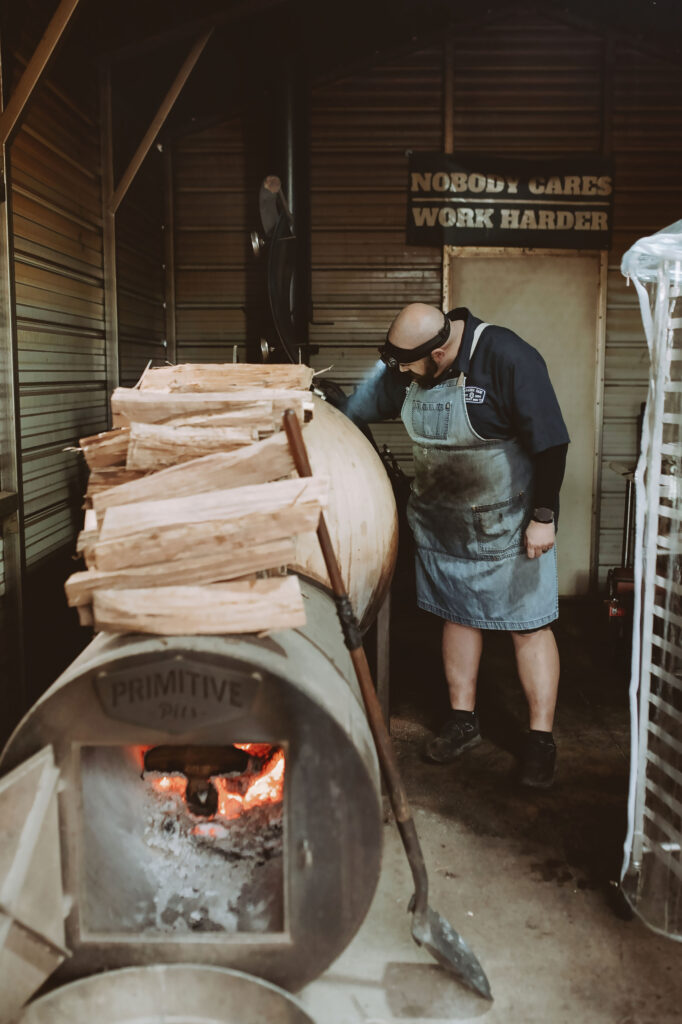
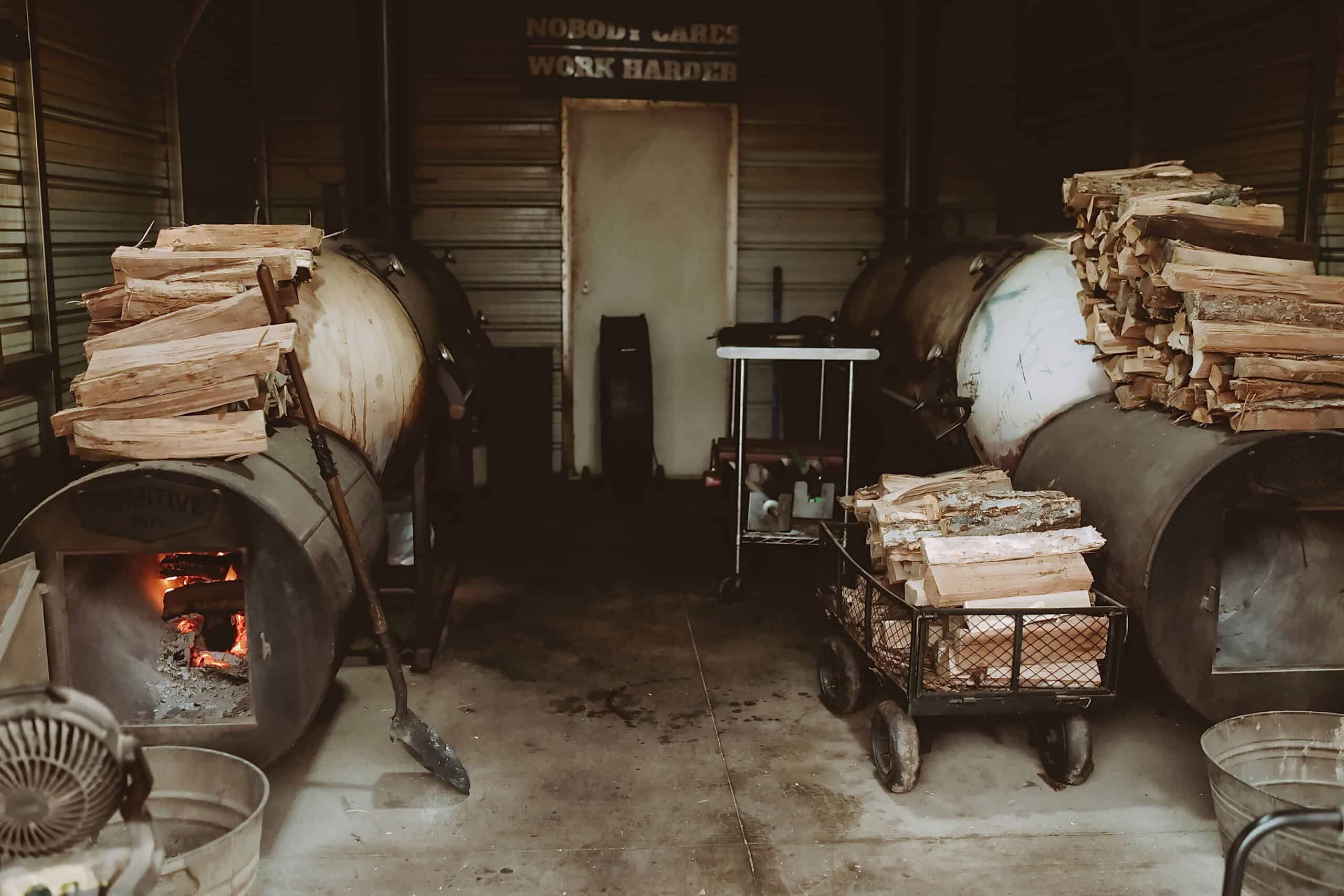
Thanksgiving week 2023, he ended up in the hospital with chemo‑induced pneumonia. It was brutal. Shortly after, with a feeding tube still in place because he couldn’t swallow, they moved to Livingston in December. The smokers arrived, each door weighing about seventy‑five pounds, and for the first three months, he struggled just to work them. But every week, he got a little stronger.
In March 2024, they opened Brazen Que. The line wrapped out the door and stayed that way for weeks. They’ve extended their hours to 11 a.m.–7 p.m. for this area, though they often sell out much earlier. In September 2024, his scans came back clear. No cancer.
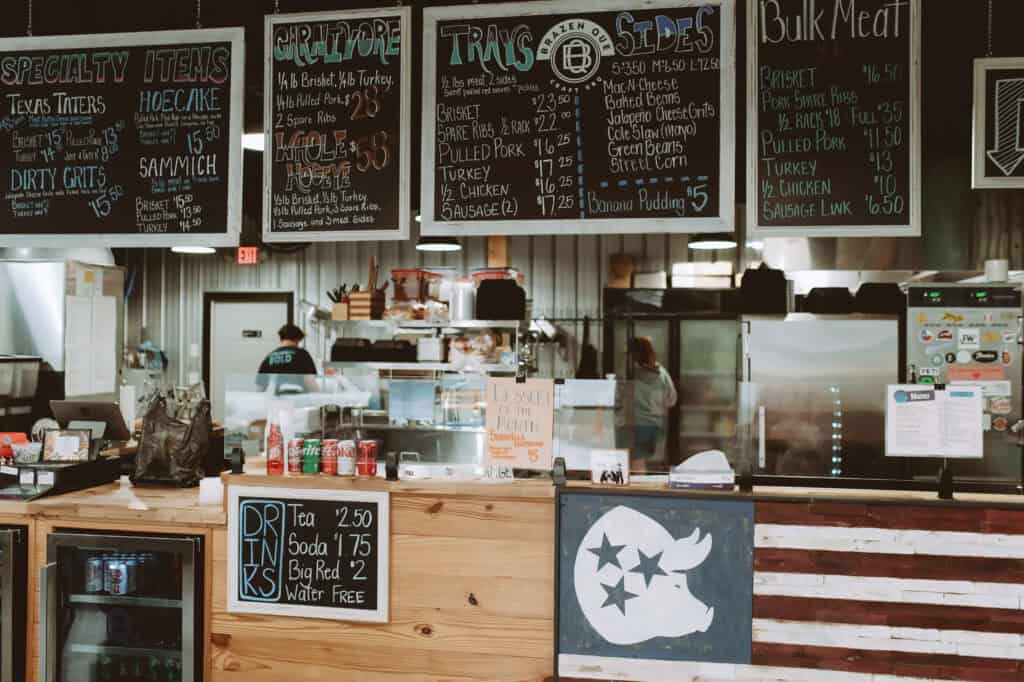
Brazen Que does not pretend to be anything other than what it is: Texas‑style craft barbecue in a town that mostly grew up on something else. That’s been one of the hardest concepts to explain here. People are used to being able to walk in whenever and order whatever they want. Add in the reality that they won’t skimp on quality, and the sticker shock at first was real.
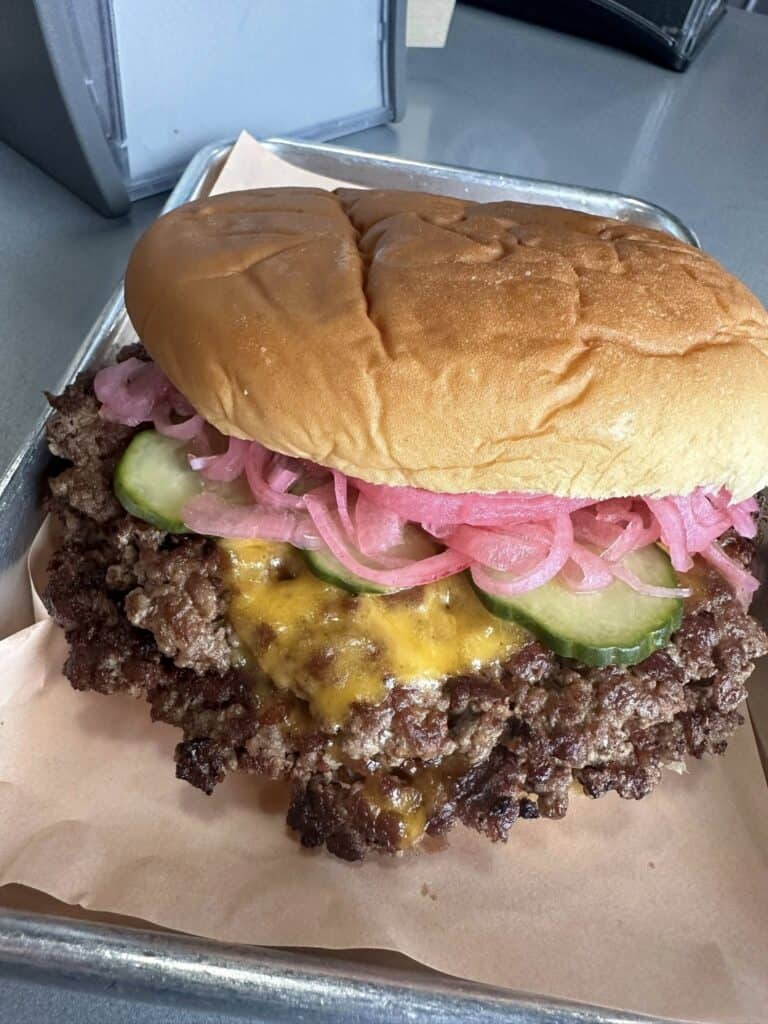
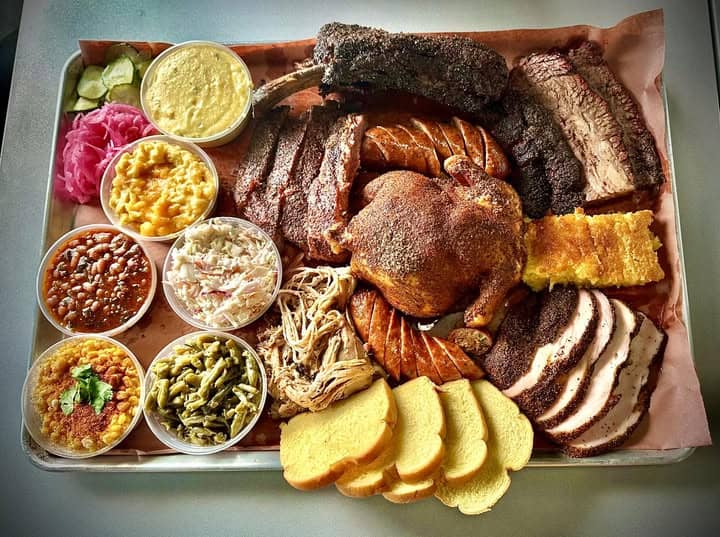
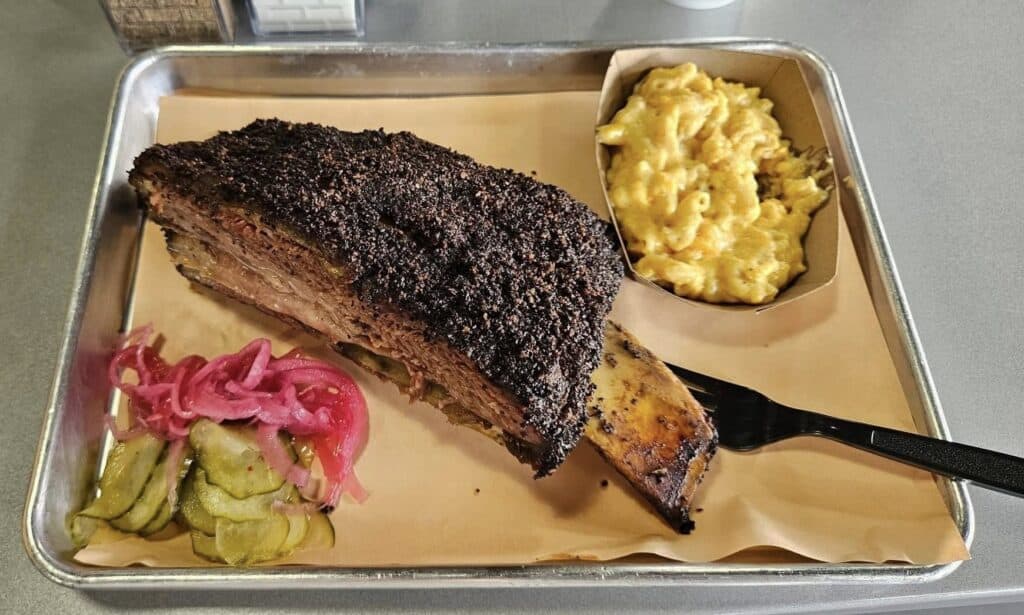
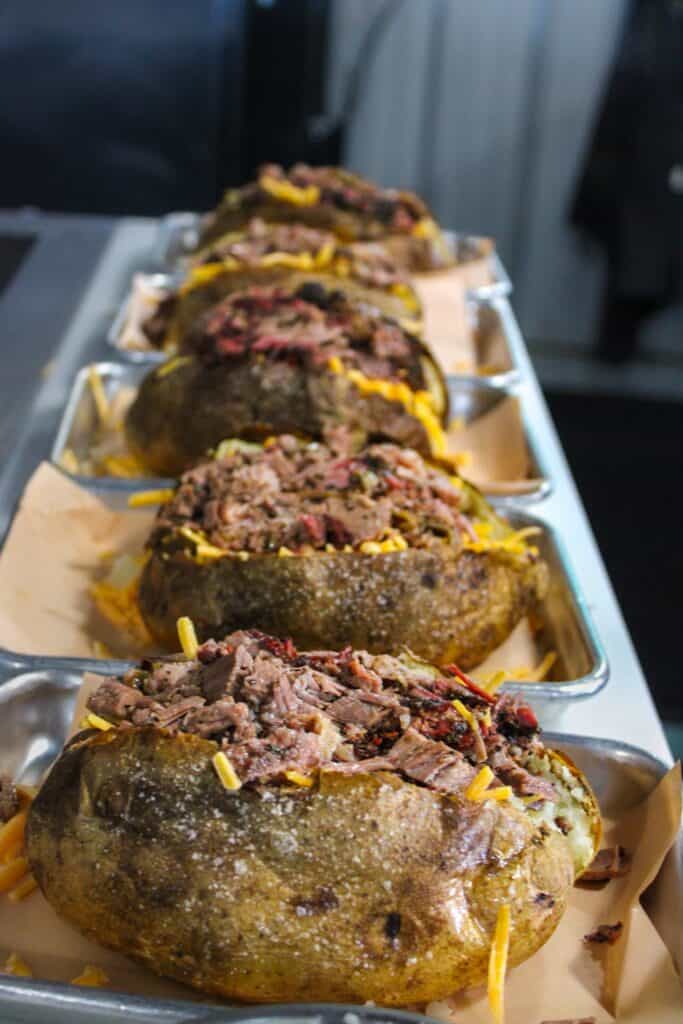
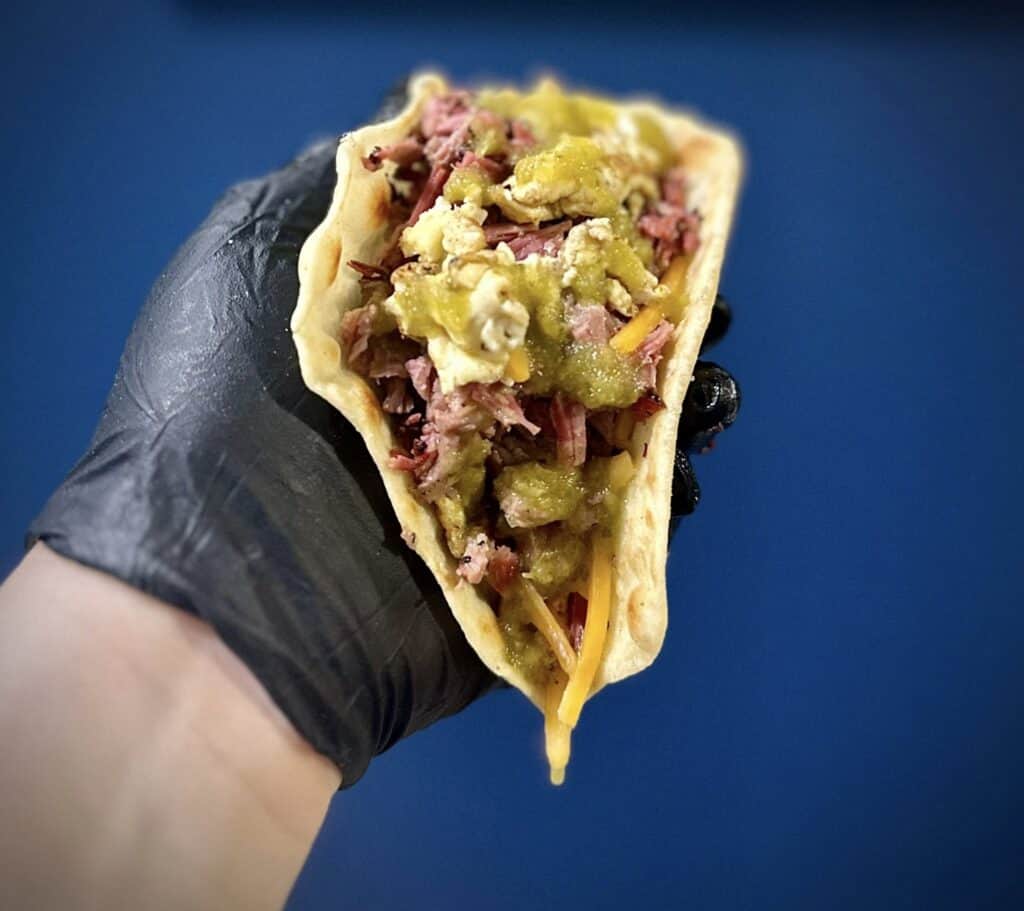
Nick and Kendra insist on top‑of‑the‑line pork butts and turkey. Everything is made from scratch, sauces, sides, banana pudding. They pickle their own onions, jalapeños, and pickles. They don’t even own a microwave. They started simple: turkey, brisket, pulled pork, and pork spare ribs. From there, they’ve experimented with specials like bison ribs and even a birthday‑cake sausage they created with their employee Brock, complete with a tallow “frosting” whipped with powdered sugar.
High on the wall, the phrase “Show up late, lose weight” nods to pitmaster John Brotherton, and to the culture that shaped them. If you want the good stuff, you come early. Educating the community on sell‑outs, on pre‑orders for big bulk pickups, on why they order meat week by week, has been a slow, patient process. Some Saturdays they sell out by four, even when they’ve planned to stay open until seven. Without years of sales history, there’s no perfect way to predict demand. They’re learning in real time, one tray at a time.
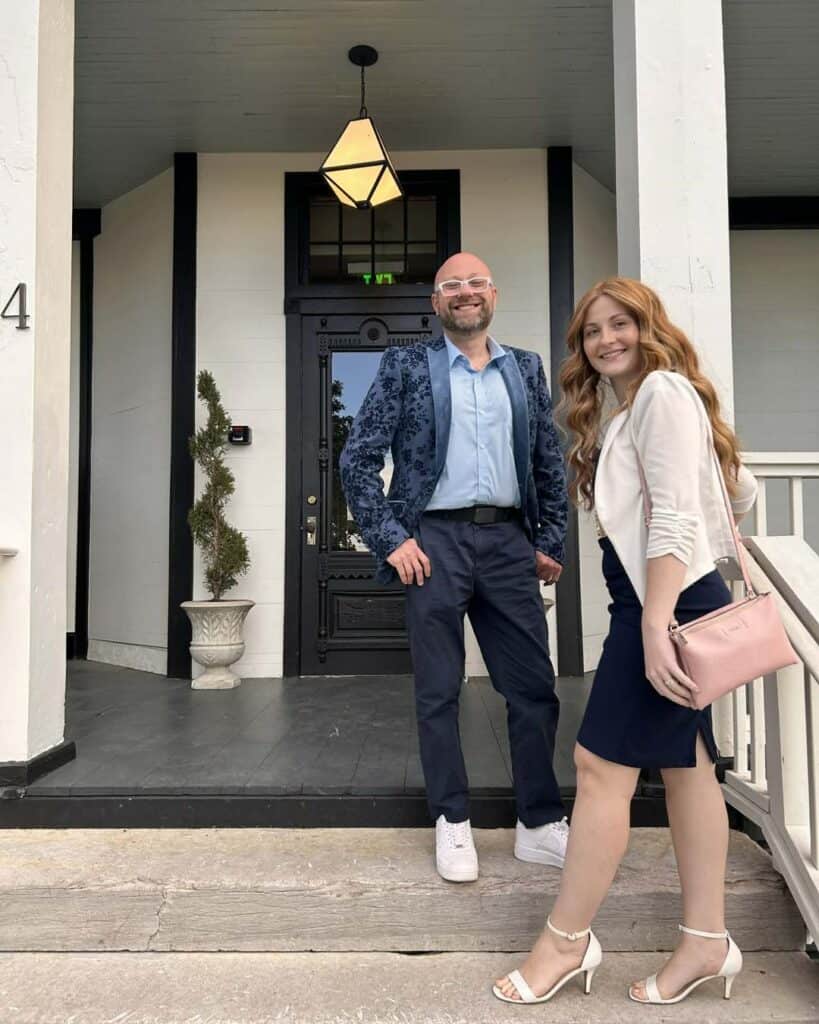
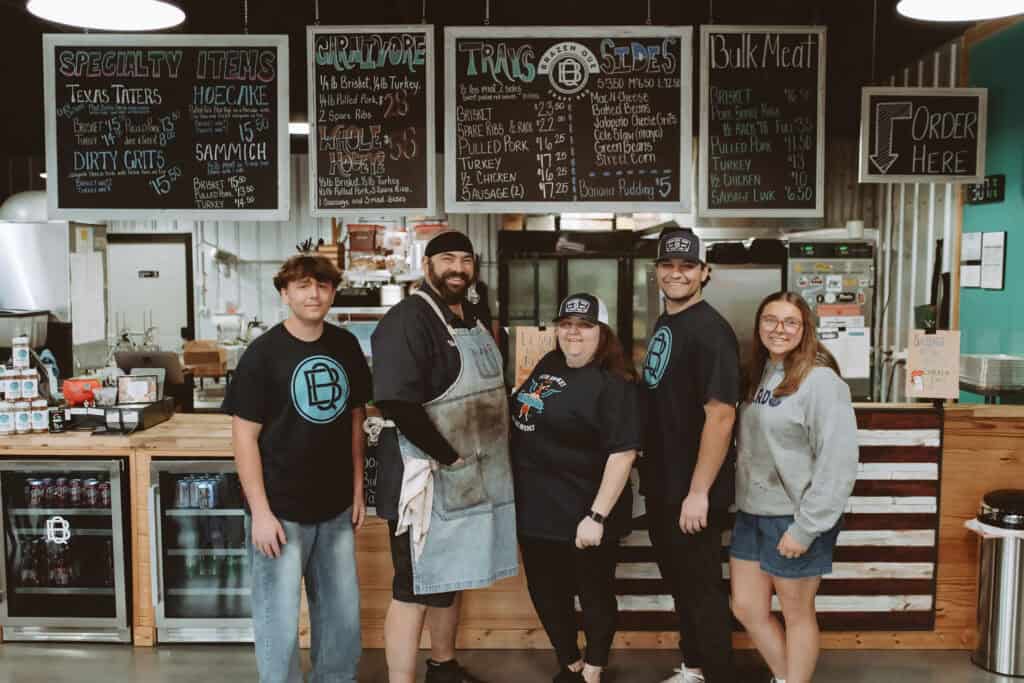
Watch the line for a while and you’ll notice something: the energy is different. Nick likes to joke that he thought they had retired from being house parents, but they really just changed houses. Their employees don’t feel like a staff as much as a big, extended family. As I watched them work, it was obvious—they don’t just have employees, they have a team that is considered family. “I thought we were done being house parents. Turns out, we just changed houses.”
Kendra is the “shop mother,” with that same watchful, nurturing presence she had in the group homes. Nick lays out three pillars for everyone who works there:
-Make undeniably good food.
-Offer top‑notch hospitality.
-Be consistent with both.
They believe consistency can make or break a business, and that genuine customer service is becoming a lost art. They want their crew to experience what it feels like to do things with excellence, to be proud of the work of their hands. They’re selective in hiring because they’re building a culture. They talk openly with their staff about not staying stuck in a victim story. “We want them to be the hero of their story, not the victim of their story,” Kendra says. They want to give these young adults opportunities they might not otherwise have—to learn, grow, and, if they choose, someday leave Brazen Que with skills and confidence they didn’t have when they arrived.
For 2026, their word for the business is “Nurture.” Nurturing their team. Nurturing their community. Nurturing the dream they feel God trusted them with.
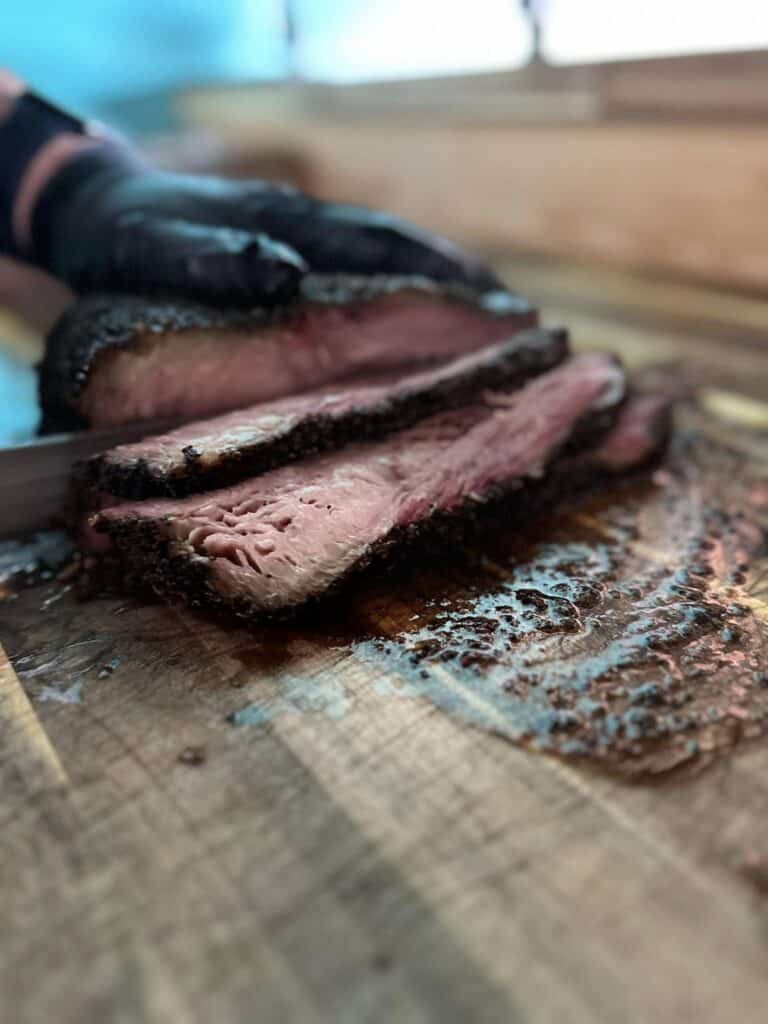
For a couple who just wanted to feed people well and be a light in a small town, the recognition has come quicker than they ever expected. They were a finalist for Best BBQ in the Herald‑Citizen awards in 2025, then in 2026 walked away with three honors: Best Lunch, Best Restaurant, and Best BBQ.
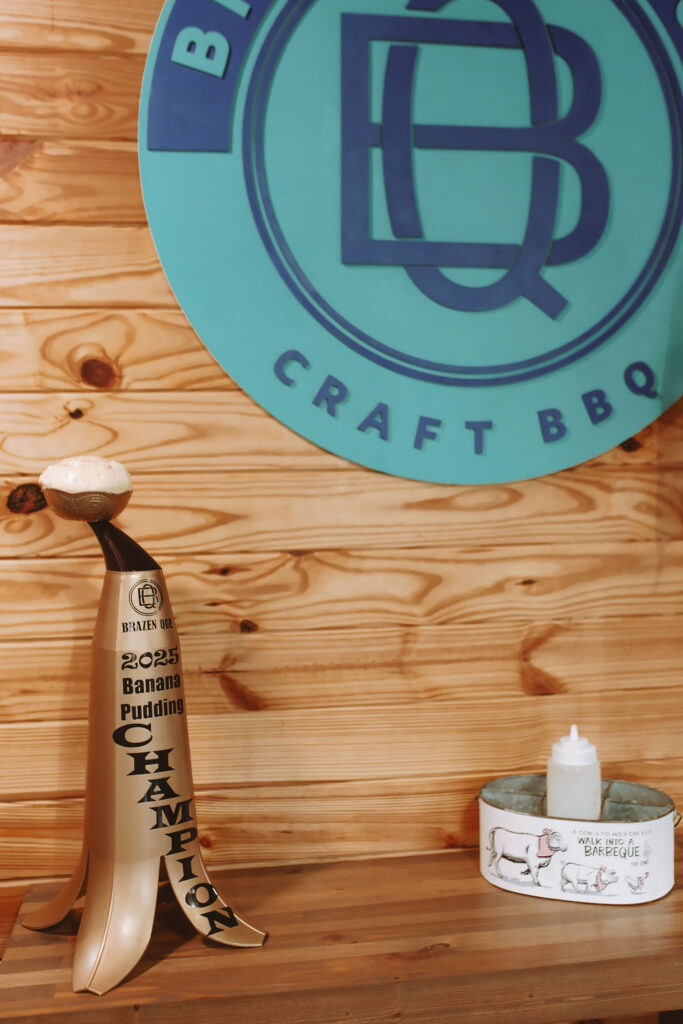
A persistent customer talked them into entering the Tennessee Banana Pudding Festival competition. They almost forgot they’d signed up until an email arrived a couple of weeks before, reminding them they would need to make 1,000 two‑ounce cups. They hustled, pulled it off, and won. With the prize money, Nick asked a friend to build the most over‑the‑top trophy he could imagine. The result? A banana‑shaped wet floor sign, dressed up with vinyl lettering, a 3D‑printed bowl, and spray‑foam “pudding,” painted and proudly displayed inside the restaurant.
They’ve been recognized as one of the “Best of Tennessee,” and their reach jumped even further when the popular social media channel Xplore Nash decided to drop by. Nick had casually messaged them months prior—“If you’re ever in the area, come see us”—and thought the opportunity had passed. Then, out of nowhere, they called and set a date.
Wanting to make an impression, Nick prepared an enormous, beautifully arranged tray. Before taking a bite, the host walked straight to the door and slapped their “approved” sticker on the glass. When the video aired later without warning, Brazen Que sold out at 12:30 p.m. on a Wednesday and 2:00 p.m. on Thursday. New faces poured in, and when asked how they’d heard of the place, the answer was the same: Xplore Nash.
“We want everyone here in Livingston to win”, Kendra says. “There is enough food in this town for everyone.”
Since then, they’ve appeared on the Xplore Nash podcast and even earned a second feature when the crew happened to stop by on a day Brazen Que was experimenting with bison ribs. Every time a new video drops, they feel the surge.
Through it all, Nick and Kendra remain genuinely grateful—not just for what it has done for them, but for what it can do for Livingston. They have no desire to leave. They love being the place fishermen recommend to each other on Dale Hollow and the lake, the spot where locals bring out‑of‑town guests, the name people in Atlanta and Alabama hear about from friends. But more than that, they love what this means for the town itself.
Nick believes,“A rising tide lifts all boats. If we can bring people here, we want the whole town to feel it.”
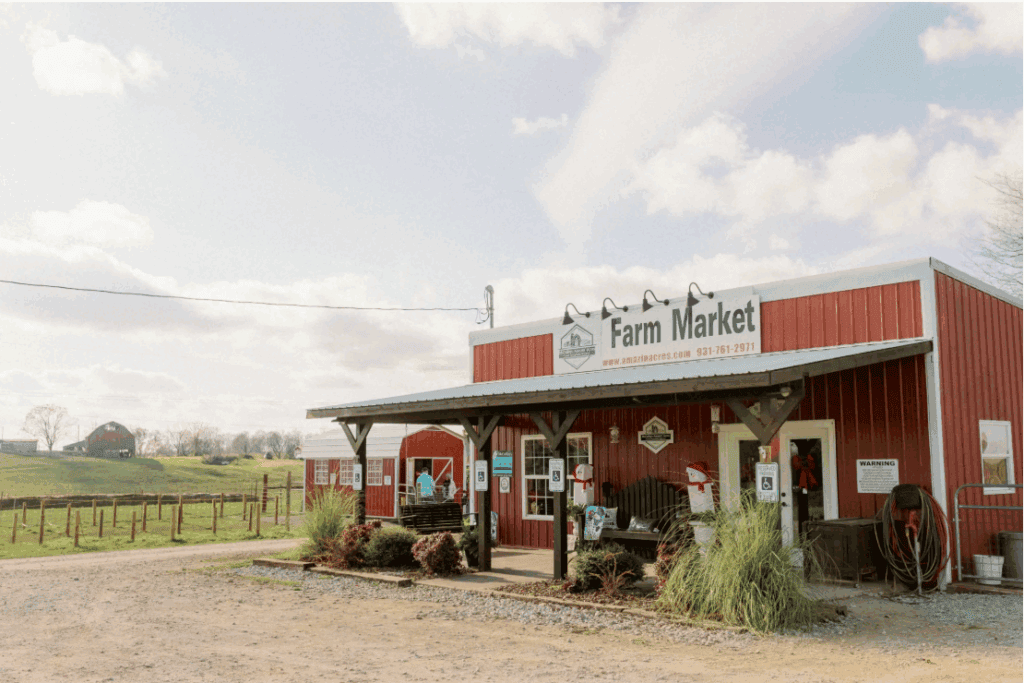
They send customers to the square, to Hill Hollow Farm Market, and to other local shops and restaurants. They recommend coffee, antiques, boutiques—whatever keeps people walking around downtown. In a small town where competition can creep in, they are determined to be the opposite.
In the end, Brazen Que is exactly what it feels like when you walk in and hear the music and see the smiles: a place that was built to feed people, body and soul. A place born around a long table of girls who needed to know they were safe, carried through a storm of treatment and uncertainty, and finally planted on Bradford Hicks Drive with a rainbow overhead and a painted mask on the wall to remind them how far they’ve come. Visit their website at www.brazenque.com
And if you want to taste the story for yourself, one piece of advice: show up early.